
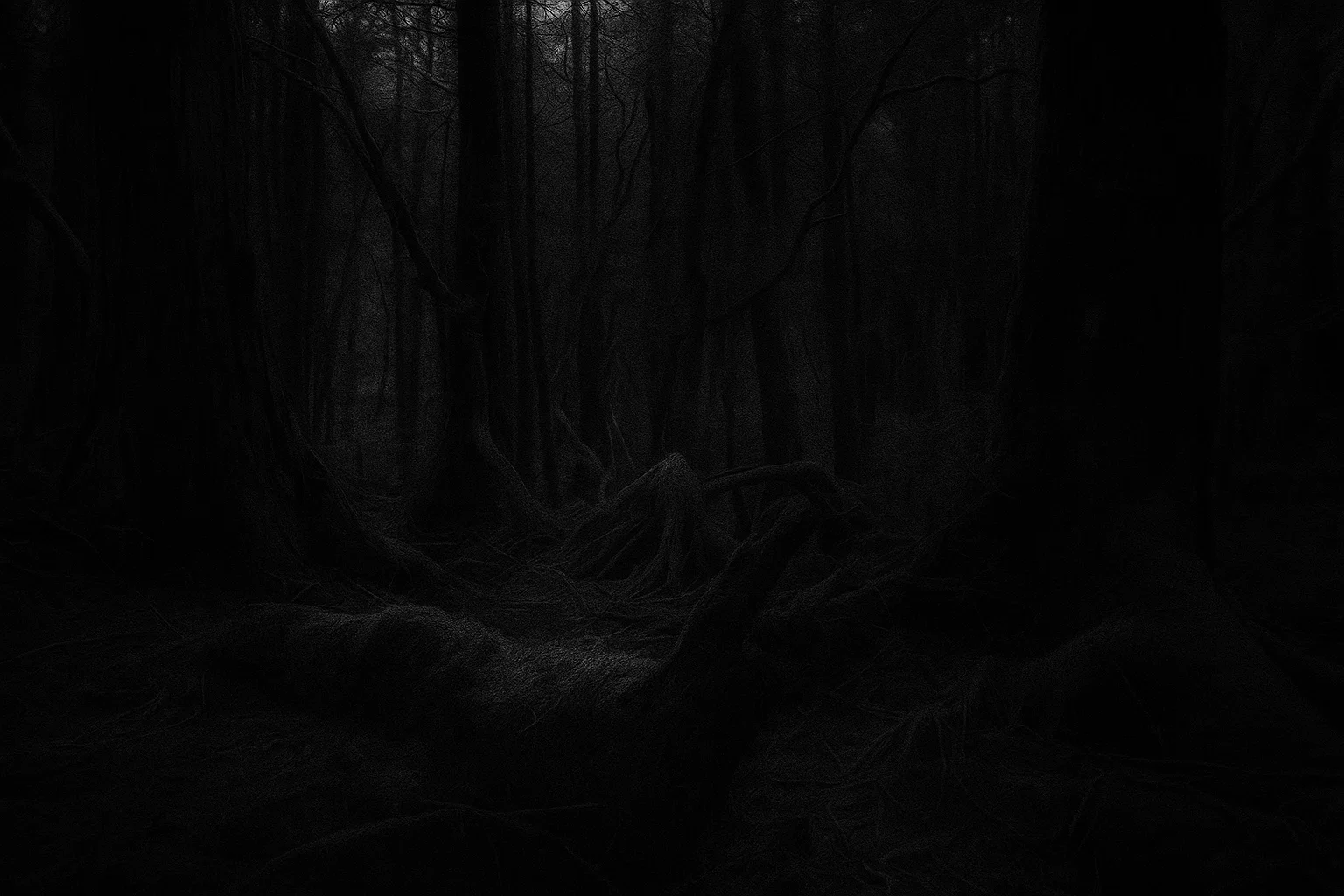

The Aokigahara Forest is a dense woodland located at the northwestern base of Mount Fuji in Japan. The area is recognized as one of the world’s most frequent sites for suicide, which has fueled its modern reputation as a paranormal location.
Japanese folklore also attributes the alleged hauntings here to the historical practice of ubasute (abandoning the elderly or infirm to die). The forest is allegedly inhabited by the tormented ghosts, known as yūrei, of those who perished within its bounds.
Summary
Overview
| Attribute | Details |
| Name | Aokigahara |
| Other Names | Jukai, Sea of Trees, Suicide Forest |
| Address | Northwestern flank of Mount Fuji, near Lake Saiko and Lake Shōji |
| Country | Japan |
| Coordinates | 35°28′12″N, 138°37′11″E |
| Nearest City | Fujiyoshida, Yamanashi Prefecture |
| Property Type | Dense forest |
| Built / Established | Grew on 864 CE lava flow |
| Closed / Abandoned | Still in use |
| Owner | Japanese State Property Agency / Prefectural Government |
| Type of Haunting | Apparitions, Residual, Intelligent, Curse |
| Manifestations | Apparitions of distressed figures, disembodied screams/wailing, unexplained feelings of dread or coldness, disorientation, electronic/magnetic interference |
| Tragic Events & Causes | Suicides (long-running history since 1950s), possible historical practice of ubasute (abandoning the elderly) |
| Known Entities | Yūrei (Japanese ghosts), spirits of suicide victims, White Lady apparitions |
| Fear Rating | 9/10 (Extremely Terrifying) [See Explanation] |
| First Recorded Sighting | Folklore dating back to the pre-modern Edo period (1603-1867) related to ubasute |
| Most Recent Sighting | Ongoing reports by body search teams and occasional visitors |
| Activity Level | 10/10 (Extreme Activity) [See Explanation] |
| Current Status | Nature park with designated trails, but access to deep areas is discouraged |
| Open to the Public? | Yes, designated trails and lava caves are open to the public as tourist sites. Access to the deeper, unmarked areas is strongly discouraged due to the risk of getting lost or finding human remains. |
| Best Time to Visit | Year-round (for official trails), but paranormal activity is reported constantly |
| Danger Warning | High risk of becoming disoriented and lost, suicide victims/remains are frequently discovered, unstable, uneven terrain on lava field |
| Similar Haunted Locations | Black Forest (Germany), Hoia-Baciu Forest (Romania), Screaming Tunnel (Canada), Dow Hill Forest (India), Suicide Cliffs (Saipan), Devil’s Den (Gettysburg, USA) |
Aokigahara Forest’s Haunted History
The Aokigahara Forest is geologically young, having formed on the solidified lava flow from Mount Fuji’s Jōgan eruption in 864 CE. Its thick density and quiet atmosphere are attributed to the porous lava rock, which absorbs sound.
The forest’s dark reputation predates its modern association with suicide, having roots in the legend of ubasute. This historical practice involved carrying the elderly (or infirm) to a remote location (such as Aokigahara) and abandoning them to die during times of famine or drought. The spirits of those who died from starvation or exposure were said to become yūrei (tormented ghosts) who haunt the woods.
The forest’s notoriety as a suicide site began to increase in the mid-20th century, in particular following the 1961 publication of the novel Nami no Tō (Tower of Waves) by Seichō Matsumoto, which depicted a character committing suicide in the forest.
Since the 1950s, the forest has gained a reputation as one of the world’s most-used suicide sites, leading to an organized effort by local police, government, and volunteers to conduct regular body searches and install warning signs. According to National Geographic, the forest’s dense growth and the uneven ground, which formed on top of an ancient lava flow, make hiking treacherous and contribute to people becoming lost, as well as making recovery efforts more difficult.
Black Salt for Protection Rituals & Wiccan Spells – 5 Oz Bag of Handcrafted Witchcraft Salt
Trusted by witches, Wiccans, and spiritual practitioners worldwide, this handcrafted black salt boasts an outstanding 4.7 out of 5 stars from over 1,739 Amazon reviews. Users praise its powerful energy-shielding properties, authentic quality, and effectiveness in banishing negativity—making it a bestselling choice for protection rituals, home warding, and cleansing after paranormal encounters.

Local Legends
Aokigahara Forest has been at the center of Japanese folklore and urban legends for hundreds of years. Older stories highlight the forest’s spiritual and supernatural sides, while more recent legends have been influenced by 20th-century books and media. Many of these tales try to explain why so many people disappear there and why the forest is seen as a place of endings. Here are some of the most well-known legends that shape how people see this place today.
The Influence of Seichō Matsumoto’s Fiction
Much of the modern “suicide forest” legend comes from the 1960 novel Nami no Tō (Tower of Waves) by Seichō Matsumoto. The book ends with a young woman going into Aokigahara to end her life, told in a tragic and romantic way. After the novel and its TV and film adaptations came out, people began to see the forest as the main setting for such acts. Although deaths happened there before the book, many still believe Matsumoto’s story made the forest famous for this reason, turning it into a symbol of tragic romance.
The Manual for the End
In 1993, Wataru Tsurumi’s book The Complete Manual of Suicide added another layer to the forest’s reputation. The book named Aokigahara as the best place to die because it is large and bodies are hard to find. This started the idea that the book was a grim “guidebook” for the forest. In the late 1990s and early 2000s, people often said they found copies of the manual with the belongings of those discovered in the woods. This helped spread the belief that the book and the forest are closely linked in a dark way.
The Ribbon Trails of the Indecisive
One well-known legend among visitors and locals is about the colorful ribbons or tape tied to trees in the forest. While forest workers or researchers sometimes put them there, local stories say that people who are unsure about their decision tie the ribbons so they can find their way back if they change their minds. On the other hand, if a ribbon trail ends deep in the woods, the legend says it means someone finished their journey. These ribbons have become a powerful symbol in media, showing a person’s final struggle.
The Forest of Eternal Silence
A lasting legend about the Sea of Trees is its “unnatural” silence. Many visitors say they do not hear birds or insects in the forest. Folklore explains this by saying the forest is “cursed” or “predatory,” so animals stay away. In reality, the thick trees and the volcanic rock on the ground absorb sound, making it quiet. Still, the legend claims the forest “swallows” noise to keep people from being heard or rescued, creating a sense of being trapped.
The Iron Spirits and Compass Failure
A common modern legend says the forest is guarded by iron spirits or strange electromagnetic forces that try to trap people. Some support this idea by saying compasses and GPS devices stop working when you leave the main paths. According to Wikipedia, the iron-rich volcanic soil in Aokigahara Forest can cause compass needles to misalign if they are placed directly on the lava, but compasses function normally when used at regular height. Folklore has exaggerated this effect, leading to the legend that the forest itself tries to keep visitors lost by interfering with navigation.
Documented Sightings Timeline
| Witness | Date | Details |
|---|---|---|
| Multiple Villagers | Ubasute era, ~1800s | During famines, families abandoned elderly relatives in the forest to die (ubasute practice); survivors and locals reported vengeful yūrei spirits—pale, shadowy figures with long black hair—wandering and luring the lost deeper into the woods with cries for help, seeking revenge on the living. |
| Numerous Hikers and Locals | Early 20th Century (~1900-1950) | Pre-suicide hotspot era reports describe yūrei as white-robed apparitions gliding silently among trees, accompanied by sudden chills and whispers mimicking family voices; believed to be spirits of the abandoned elderly, they allegedly cause compasses to spin and induce panic, making hikers feel “engulfed” by the trees. |
| Seicho Matsumoto | 1960 (“Kuroi Jukai”) | The novel’s depiction of lovers’ suicides amplified folklore; subsequent reader reports claimed yūrei visitations post-reading, including ethereal figures beckoning suicidal individuals and faint sobs echoing from tree hollows, blending literary influence with alleged real encounters. |
| Tokyo University Research Team | 1962 | Geological expedition of 12 members recorded unexplained cries and whispers on audio equipment; pale hands emerged from undergrowth, temperatures plummeted, and one tape captured a distorted voice saying “Join us” amid static, attributed to yūrei of historical victims. |
| Hikers and Volunteers | 1970s-1980s | As suicides rose, search volunteers reported hearing blood-curdling screams from empty areas and seeing fleeting white figures; one account from a patroller described a translucent elder woman pointing accusingly before vanishing, linked to ubasute spirits. |
| Rob Gilhooly (Journalist) | 2002 | While researching for The Japan Times, Gilhooly heard a piercing scream, leading to a decomposed body; the cry continued emanating from the corpse’s direction despite evident long death, followed by oppressive silence and a sense of being watched by unseen entities. |
| Several VICE Tour Participants | 2008 | Tour group heard disembodied sobs and screams; discovered a faceless doll nailed upside-down to a tree as a curse, after which equipment failed and cold spots formed, with shadows flickering in footage. |
| Destination Truth Crew (Josh Gates et al.) | October 1, 2008 | SyFy investigation captured thermal images of a drifting white humanoid silhouette; crew experienced name-calling whispers, intense dread, and compass malfunctions, with EVPs (electronic voice phenomena) pleading “Stay with us.” |
| Kyoto Journalist (Unnamed) | 2008 | Probing Yūrei Mura legends, he followed a glowing orb at midnight from his tent, vanishing; camera recovered in a tree with footage of childlike laughter and morphing shadows. |
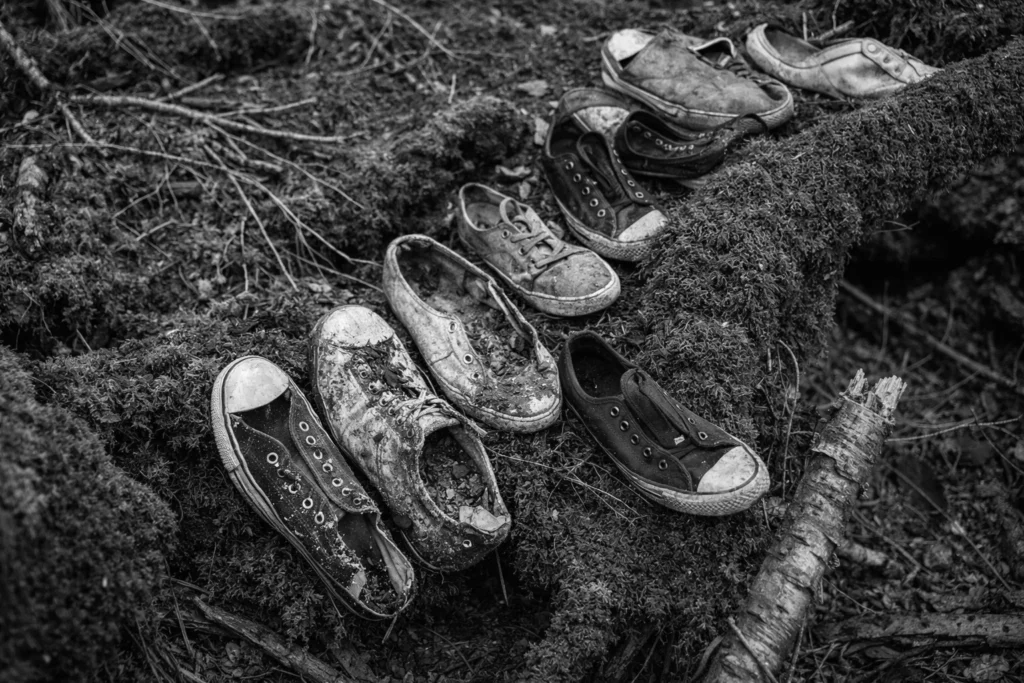
| Anonymous Solo Hiker | 2014 | Off-trail exploration revealed a noose and shoes; heard rustling and saw a pale figure in white dart between trees, accompanied by whispers urging “Come closer,” fleeing in panic. |
| Reddit User | October 15, 2014 | Found a single noose off the main trail; felt overwhelming paranoia and heard faint cries, later attributing it to yūrei influence drawing in the depressed. |
| Reddit User | December 7, 2016 | Photographed a skeletal figure in underbrush near a suicide site; endured constant following sensations and paranoia, with photos showing anomalies like orbs and distortions. |
| VICE Documentary Crew (Azusa Hayano Guide) | 2016 | Filming tour, encountered the cursed doll; microphones picked up sobbing EVPs, equipment glitched, and group felt hands brushing their necks in still air. |
| Logan Paul | Late December 2017 | YouTube exploration for “creepy” footage heard wails and saw peripheral white figures amid silence broken by rustling; oppressive atmosphere intensified near the body they filmed. |
| Liam Carter (British Backpacker) | 2019 | Overnight camper found a rusted lunchbox with family photos; awakened by whispers and a small translucent child figure beckoning into the woods, escaping at dawn. |
| Multiple Campers | 2020-2022 | Various groups reported yūrei as a “Lady in White” gliding silently, mimicking loved ones’ voices in pleas, and sudden decay scents with temperature drops; some left offerings at altars to appease spirits. |
| Podcast Investigators (Connect Paranormal) | July 5, 2024 | Audio expedition captured restless yūrei moans and grievances; team described shadowy entities with unresolved anger, tying into folklore of violent deaths trapping souls. |
| Mr. Kubelík (Explorer) | November 3, 2024 | Deep after-dark hike past “Do Not Enter” signs caused choking sensations, swallowing difficulty, and near-fainting; encountered an indescribable disturbing presence, with 50 minutes of eerie footage showing unexplained movements. |
| Podcast Hosts (For The B-oo’s) | July 28, 2024 | On-site recording in the “Black Sea of Trees” yielded ghostly whispers and apparitions on video; hosts felt pulled deeper, linking to yūrei luring the vulnerable. |
| Multiple Social Media Users | 2025 | Scattered reports include a Nigerian user (November 29) seeing a female ghost in bushes requesting help with firewood before vanishing; a Japanese thread (June 12) described voices from shrines pulling toward chicken feathers and goat heads; another (May 20) of home-haunting lights flashing post-forest visit, attributed to carried yūrei energy. |
Paranormal Activity
The paranormal activity at Aokigahara Forest is primarily centered on the intense concentration of death that has occurred within its boundaries. Investigators often report a profound, eerie quiet that seems to swallow sound, which is amplified by the naturally sound-absorbing lava floor, which contributes to a sense of isolation and disorientation.
Beyond the typical manifestations, a pattern of geomagnetic anomaly is frequently noted. The high concentration of magnetic minerals within the basalt lava rock on the forest floor is known to interfere with compasses and GPS signals.
This natural phenomenon is sometimes cited as either causing or exacerbating feelings of disorientation and loss, which may contribute to the forest’s negative influence.
Reports consistently describe a heavy, oppressive atmosphere the deeper one ventures, often resulting in sudden, unexplained drops in air temperature (cold spots) and extreme emotional shifts, such as intense dread or profound sadness. This is attributed to the presence of the yūrei, the tormented souls trapped in the forest.
Notable Investigations
Due to the forest’s sensitivity as a suicide site, large-scale, professional paranormal investigations are not commonly permitted or widely broadcast in an official capacity.
However, numerous independent and documentary film crews have ventured into Aokigahara to record the alleged phenomena. These investigations frequently focus on documenting the reported technical interference, such as compass needles spinning and the sudden, total failure of battery-operated equipment.
In-depth investigations often use highly sensitive recording equipment and Geiger counters, uncovering both EVP evidence and unexplained electromagnetic field (EMF) spikes.
Most findings are attributed to the forest’s magnetic mineral content rather than purely paranormal causes. However, the correlation between high EMF readings and reported emotional distress remains a common subject of debate in the supernatural community.
The common conclusion of most research is that a combination of the forest’s unique geology and its long, tragic history creates an environment highly conducive to psychological effects and paranormal manifestations.
Tags:
Explore More Haunted Locations:
Hoia-Baciu Forest (Cluj-Napoca, Romania)
February 2, 2026
Château de Brissac (Maine-et-Loire, France)
February 5, 2026
Sloss Furnace (Birmingham, AL)
January 22, 2026
Chillingham Castle (Northumberland, UK)
January 28, 2026
The Queen Mary (Long Beach, CA)
February 13, 2026
Hohenzollern Castle (Baden-Württemberg, Germany)
March 2, 2026
