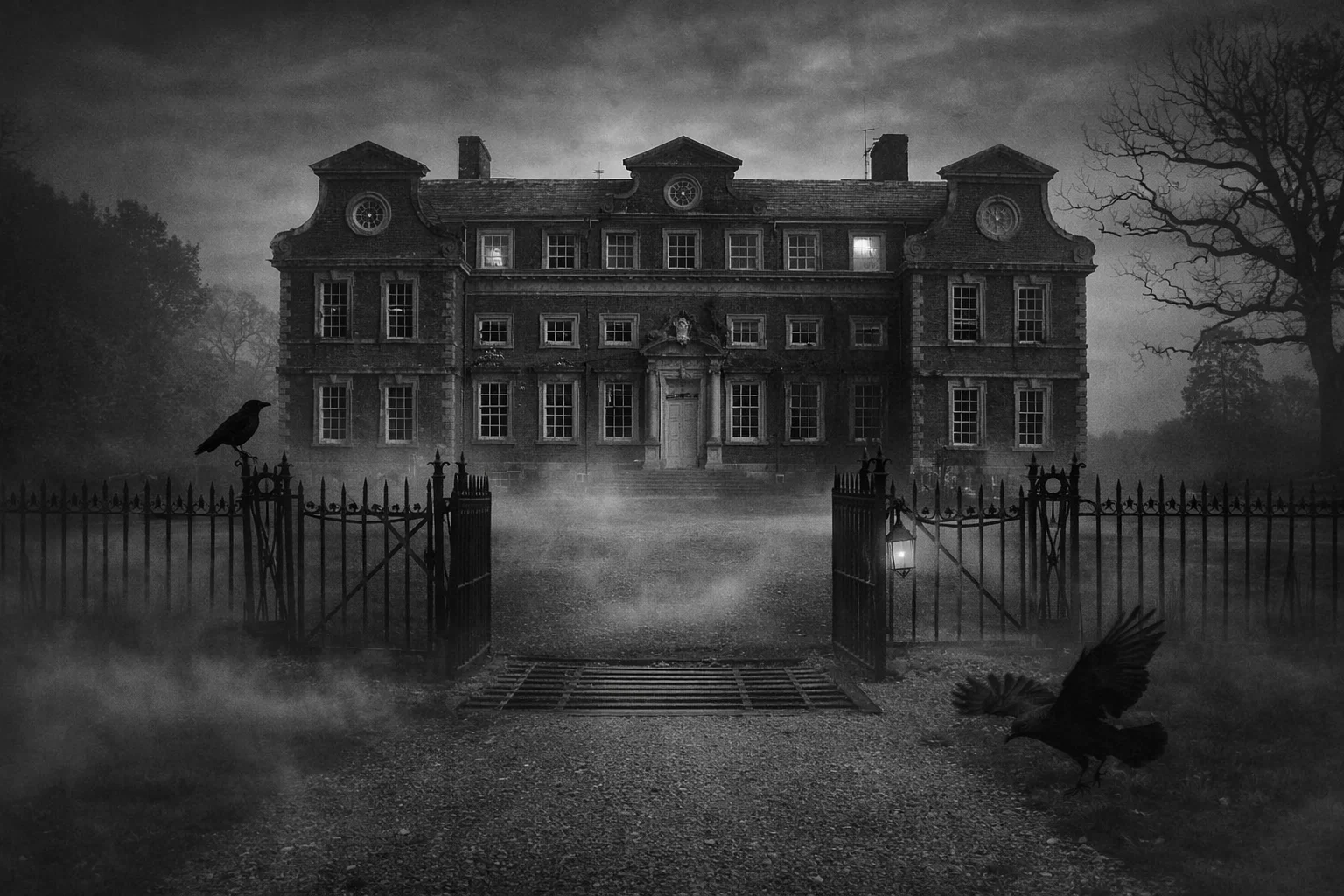

The Raynham Hall haunting is one of the best-known cases of paranormal activity in the UK. The story centers on the Brown Lady, said to be the ghost of Lady Dorothy Walpole, who lived and died at the estate in the 1700s.
The haunting became famous worldwide after a 1936 photograph reportedly captured a ghost descending the hall’s grand staircase.
Summary
Overview
| Attribute | Details |
| Name | Raynham Hall |
| Other Names | Home of the Brown Lady, Raynham Estate |
| Address | Raynham, Fakenham, NR21 7EP, Norfolk |
| Country | United Kingdom |
| Coordinates | 52.7936° N, 0.7904° E |
| Nearest City | Fakenham |
| Property Type | Country house / Stately home |
| Built / Established | 1619 |
| Closed/Abandoned | Still in use |
| Owner | The Townshend Family (Marquess Townshend) |
| Type of Haunting | Apparitions, Residual, Intelligent |
| Manifestations | Shadowy figures, glowing faces, empty eye sockets, footsteps, cold drafts, malicious grinning, floating lamps |
| Tragic Events & Causes | Alleged forced confinement of Dorothy Walpole, suspicious death by smallpox or falling down stairs, starvation |
| Known Entities | The Brown Lady (Lady Dorothy Walpole), The Duke of Monmouth, The Red Cavalier, Two ghostly children |
| Fear Rating | 6/10 (Moderately Frightening) [See Explanation] |
| First Recorded Sighting | Christmas 1835 (Colonel Loftus) |
| Most Recent Sighting | Early 1960s – report by a NATO officer’s wife; sightings have since become extremely rare. |
| Activity Level | 2/10 (Low Activity) [See Explanation] |
| Current Status | Private residence |
| Open to the Public? | No (Private property; occasional limited tours or events may be booked via the estate) |
| Best Time to Visit | Winter (specifically Christmas season when historical sightings peaked) |
| Danger Warning | Private property; strictly no trespassing; potential for aggressive spectral encounters (historical reports) |
| Similar Haunted Locations | Houghton Hall, Sandringham House, Borley Rectory, Ancient Ram Inn, Chillingham Castle, Blickling Hall, Ham House, Tower of London, Berry Pomeroy Castle, Woodchester Mansion, Skirrid Mountain Inn, Llancaiach Fawr Manor, Speke Hall, Littledean Jail, Ettington Park Hotel, Pendle Hill |
Raynham Hall’s Haunted History
Raynham Hall’s troubled past is closely tied to the Townshend family, especially Charles Townshend, the 2nd Viscount Townshend. Charles, a well-known politician nicknamed “Turnip” Townshend, was said to have a violent temper and strong jealousy.
In 1713, he married Lady Dorothy Walpole, the sister of Britain’s first Prime Minister, Robert Walpole. Their marriage, meant to strengthen political ties, set the stage for the hall’s most famous haunting.
The story takes a dark turn when Charles reportedly found out that Dorothy had an affair with Lord Wharton before or during their marriage. Angry over this, Charles is said to have locked Dorothy in her rooms at the hall.
Local accounts say Dorothy was not allowed to see her children and was kept alone in her rooms. Official records claim she died of smallpox in 1726 at age 40, but rumors suggest something more sinister. Some stories say her husband starved her, while others claim she was pushed down the grand staircase and broke her neck.
The mystery around her death and the stories of her mistreatment helped fuel the haunting legend. Soon after she was buried at St. Mary’s Church, people began reporting sightings of a woman in a brown silk dress walking through the mansion’s halls.
Witnesses described the ghost as having a very pale face and, most unsettling of all, black, empty spaces where her eyes should be. The haunting frightened the staff so much that many reportedly quit after seeing the “Family Ghost.”
Lady Dorothy’s story is not the only dark chapter in the hall’s past. In the 1600s, the house was a hub for the Townshend family’s political power, leading to fierce rivalries and family problems. Records from the 1830s say the house felt so gloomy that visitors, like Colonel Loftus, noticed a strong sense of unease in the State Bedrooms.
In the Victorian era, the family’s social status declined amid financial difficulties and arguments. Reports of strange events increased during this time. The house, designed by Inigo Jones, has many narrow hallways and hidden spaces, which adds to its reputation for odd noises and shadowy figures.
In the 1920s, the Townshend children said they saw the “Brown Lady” in the nursery, adding recent support to the old stories of a family tragedy that never really ended.
Banish Spirits with Sacred Smoke – 3-Pack White Sage Smudge Torches
This set from Alternative Imagination includes three hand-tied torch-style smudge sticks made from 100% natural California white sage (Salvia Apiana). Each thick bundle measures approximately 4-5 inches long, perfect for traditional smudging rituals to clear negative energy, purify haunted spaces, or protect during paranormal explorations—sustainably sourced for authentic, fragrant smoke.

Local Legends
Stories about Raynham Hall have been told for centuries, mostly focusing on who the Brown Lady was and what happened to her.
The Imprisoned Wife
The most popular legend says Lady Dorothy Walpole did not really die of smallpox in 1726. Instead, people whisper that her funeral was fake, with an empty coffin meant to fool her powerful brother, Sir Robert Walpole.
According to the legend, she was kept locked in a hidden room upstairs for years after her supposed death, and died from neglect and sadness. This story is used to explain why her ghost is often seen near the bedrooms and staircase, looking for the children she never got to hold.
The Malicious Grin
Another local story focuses on how the ghost acts. Unlike most “Lady in White” tales, where the spirit seems sad, the Brown Lady is sometimes said to have a mean and even evil personality.
In the 1800s, some witnesses said that if they got close to the ghost, she would lift her lamp to her face, show her empty eye sockets, and grin in a way that left people deeply shaken.
Reported Ghosts
Although the Brown Lady is the most famous ghost, people say Raynham Hall is home to several other spirits, too:
- The Duke of Monmouth: James Scott, the 1st Duke of Monmouth, is rumored to haunt the house. He was King Charles II’s illegitimate son and was executed for treason. His link to the hall comes from the family’s history, and people say his ghost appears as a noble entity in different rooms.
- The Red Cavalier: Guests have reported seeing a ghost in the bedrooms. He is described as a man in 17th-century clothes, wearing a red tunic, who stands at the foot of beds, bows politely, and then disappears through the walls.
- Ghostly Children: Some visitors and residents say they have heard the sounds of children crying or playing in the nurseries. Some believe these are the children Dorothy was kept away from during her life.
The 1936 Photograph Controversy
The photo taken on September 19, 1936, at Raynham Hall is often called the most important spirit photograph ever. However, it is still hotly debated by experts and skeptics.
Captain Hubert C. Provand and Indre Shira took the photo around 4:00 PM. It shows a see-through, shrouded entity coming down the oak grand staircase. The main question is whether this is a real ghost or just a clever photographic mistake.
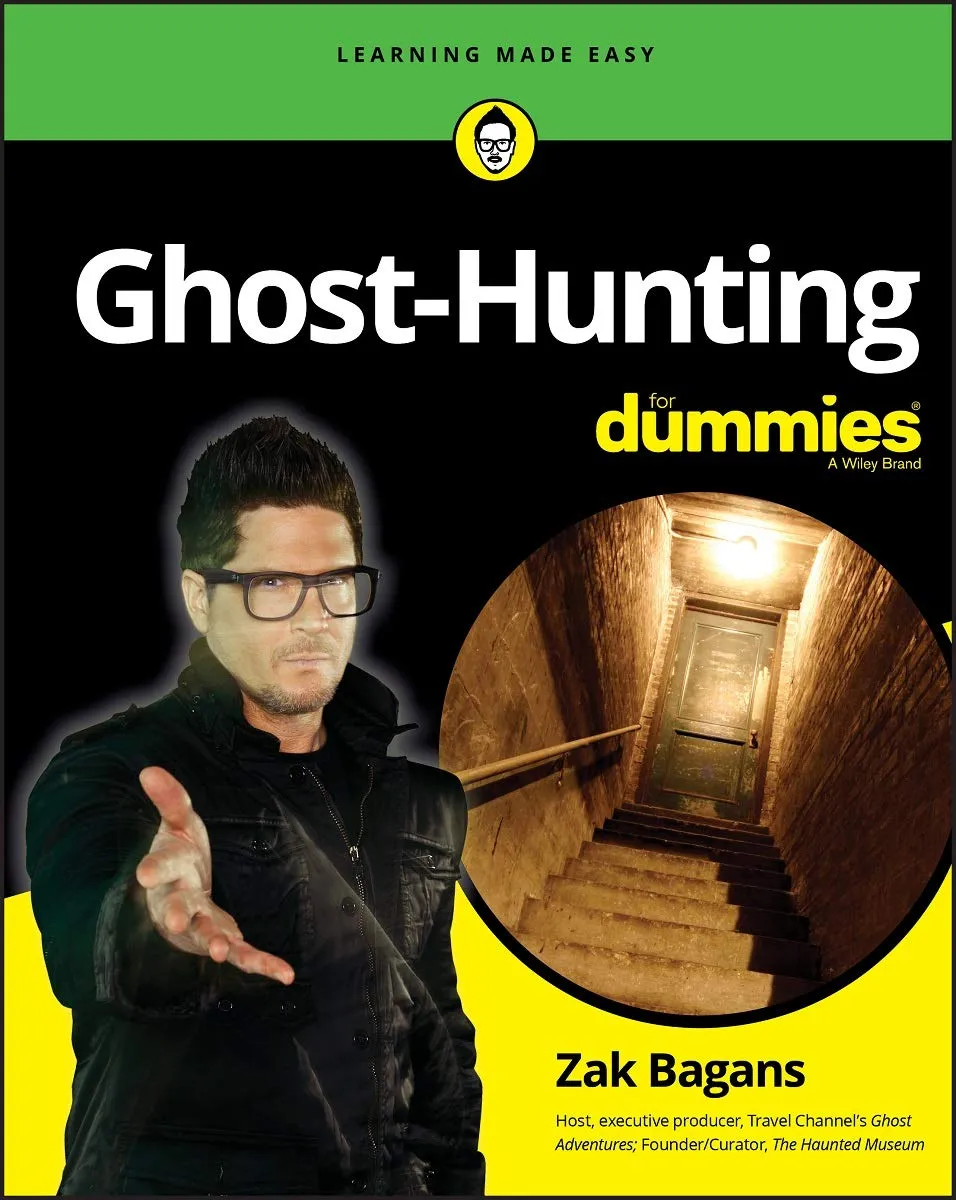
Zak Bagans’ Ghost-Hunting For Dummies – 448-Page Step-by-Step Manual
Written by Zak Bagans, star of Ghost Adventures and founder of the Haunted Museum, this 448-page paperback is the ultimate beginner-to-advanced guide to paranormal investigating. It covers the history of ghost hunting, choosing haunted locations, using scientific tools and cameras, conducting safe investigations, and interpreting evidence—complete with real stories from Bagans’ famous cases.
Technical Analysis
Experts who studied the original negative found several technical oddities. Skeptics mainly think the image was caused by double exposure.
Some analysts say the entity looks a lot like a statue of the Virgin Mary, which might have been superimposed onto the staircase. Also, the light on the entity does not match the hall’s natural lighting; it seems to be lit from the front, which could mean a second flash or another exposure was used.
In 1937, experts from the Society for Psychical Research (SPR) noticed that the entity’s edges appeared “softened,” suggesting movement during a long exposure. One theory is that Indre Shira might have put something on the lens in the shape of a figure to make it look blurry.
Other critics have noticed a pale line above each stair, which usually means that one photo was placed on top of another.
Professional Defense and the Kodak Inquiry
Despite these doubts, Provand and Shira always stood by their story. Provand, a respected London photographer, put his reputation on the line by sharing the photo. To check if it was real, they sent the original negative to Kodak for a thorough inspection.
After careful lab tests, Kodak experts gave a clear verdict on the film. They said the negative was “entirely innocent of any faking.” They also said they found “no evidence of any kind of retouching, stripping, or double-exposure” on the plate.
Harry Price, a well-known expert in spotting fake photos, also checked the negative and agreed with Kodak’s findings. Price said, “The negative is entirely innocent of any faking,” and admitted he was “unable to shake their story.” He thought that only a secret plan between the two men could explain the ghost if it was fake, but he found this unlikely because of Provand’s good reputation.
The “Light Leak” Hypothesis
One common technical explanation is that the camera had a mechanical problem. The Society for Psychical Research found that Provand’s camera had old bellows that allowed light to enter. This theory suggests that a tiny hole in the bellows lets a beam of light hit the plate as it is moved, making a vertical, ghost-like streak.
However, people who believe the photo is real argue that a simple light leak would not create the clear head-and-shoulders shape seen in the final image.
Modern Conclusions
In recent years, experts have used digital tools to examine the ghost’s “eyes.” Some people say they see the empty sockets that Colonel Loftus described. Still, digital analysis suggests these are just shadows made by the folds of the “shroud.”
In the end, even though Kodak and Price found no signs of tampering, most modern photo experts think the image was caused by a mix of accidental double exposure and light reflection. Still, the mystery remains a key part of British paranormal history.
Documented Sightings Timeline
| Witness | Date | Details |
| Colonel Loftus | Christmas 1835 | While staying for the holidays, he saw a woman in a brown dress on the stairs. Upon closer inspection, he saw her face had no eyes, only empty black sockets. |
| Staff Members | 1835 | Multiple servants reported seeing the figure and resigned from their positions in terror. |
| King George IV | Early 1800s | While staying at the hall, the King reportedly woke to see a pale woman in brown standing by his bed. He refused to stay another night. |
| Captain Frederick Marryat | 1836 | Attempting to prove the ghost was a smuggler’s trick, he encountered the lady in a corridor. She grinned at him diabolically, and he fired a revolver at her; the bullet passed through and lodged in a door. |
| Major Loftus | 1849 | Encountered the lady on the landing after a game of chess; his report led to a massive departure of the hall’s domestic staff. |
| Lady Townshend’s son | 1926 | The young boy and a friend saw the apparition on the staircase and noted its resemblance to the portrait of Lady Dorothy. |
| Hubert C. Provand & Indre Shira | September 19, 1936 | While photographing the hall for Country Life, Shira saw a vapoury form descending the stairs. They captured the famous “Brown Lady” photograph. |
| Officer’s Wife | Early 1960s | An anecdotal report of a sighting of the “gauzy” figure on the staircase. |
Paranormal Activity
People at Raynham Hall often report seeing ghosts and hearing strange sounds. The most common stories mention the “swish” of silk skirts in the picture gallery and the sound of heavy footsteps on the grand staircase.
Many witnesses report feeling a strong sense of fear and noticing a sudden chill before the Brown Lady appears. The haunting was most active in the 1800s and early 1900s, but sightings have dropped a lot since the 1936 photo was published. Some people think the ghost may have moved on or gone to a nearby estate, such as Houghton Hall.
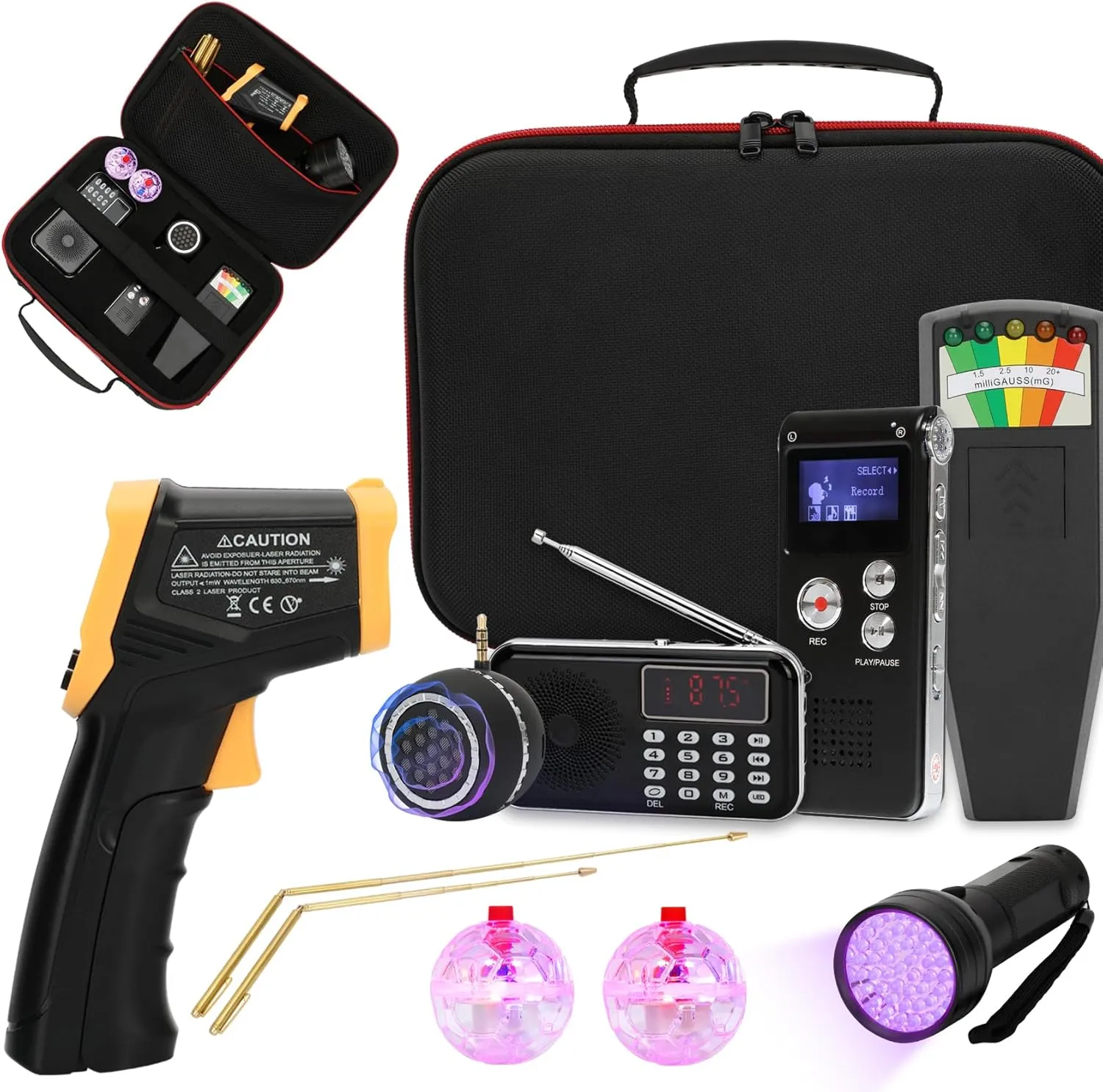
Complete 11-Piece Ghost Hunting Kit – Everything for Beginner Paranormal Investigations
This all-in-one ghost hunting equipment kit provides the essential tools for exploring haunted locations:
- EMF meter (0-20+ mG range with activity level indicators)
- 8GB EVP recorder (up to 36 hours recording for capturing whispers/EVPs)
- Spirit box FM radio + portable speaker for real-time communication
- Infrared thermometer for spotting cold spots, UV flashlight for hidden evidence
- Brass detection rods and motion light-up cat balls to trigger spirit responses
- Shockproof carrying case with custom foam for easy transport
All the core tools you need in one convenient package.
Notable Investigations
The investigations at Raynham Hall were among the first to use scientific methods and careful study in paranormal photography. Unlike many modern cases, these investigations focused mainly on verifying to single photograph, which is still debated today.
The Country Life Discovery (1936)
The most important investigation began on September 19, 1936, under the leadership of Captain Hubert C. Provand, a professional photographer, and his assistant, Indre Shira. They were hired to photograph the building, but their visit quickly turned into an unexpected ghost hunt.
Shira, the main witness, said he saw a “vapoury form” descending the stairs. Provand was under the camera’s focusing cloth and took the photo when Shira told him to. That photograph became the center of all later investigations.
Harry Price’s Analysis (1937)
Shortly after the photograph’s publication, Harry Price, the honorary secretary of the University of London Council for Psychical Investigation and a renowned expert in exposing fraudulent mediums, conducted a formal interview with Provand and Shira.
Price, known for his skepticism, said he found no signs of tampering. He stated that the negative was “entirely innocent of any faking”. He believed that only a complicated plot between the two men, which he considered unlikely, could explain the image if it were a hoax.
The Society for Psychical Research (1937)
In January 1937, the Society for Psychical Research began a thorough investigation led by C. V. C. Herbert. The team checked the camera equipment and found that Provand’s old camera had faulty bellows, which could have caused light leaks.
Herbert’s report said the image appeared “shaken in a vertical plane,” causing some lines to appear doubled. The SPR decided that, even though the witnesses seemed honest, the ghostly image probably had a simple explanation, like camera vibration or double exposure.
The International Institute for Psychical Research (1937)
Dr. Nandor Fodor, Research Officer for the IIPR, conducted a weekend-long investigation at the hall in 1937. Accompanied by his family and camera expert Arthur Kingston, Fodor attempted to replicate the conditions of the 1936 photograph. They took several control shots of the staircase, including images with Mrs. Fodor positioned where the ghost was seen.
They found that reflections from the banisters or lens flare from the flashbulb might have made it appear that a figure was in the photo.
Modern Re-evaluations (2006)
In 2006, SPR investigator Alan Murdie discovered new files at Cambridge University Library relating to the 1937 SPR investigation. This review showed that the photo had bright spots on the stairs and banisters that matched the lighting on the “ghost,” which supports the idea that it was a technical glitch, not something supernatural.
Tags:
Explore More Haunted Locations:
Aughrim Battlefield (Galway, Ireland)
December 8, 2025
Edgar Allan Poe House (Baltimore, MD)
February 17, 2026
Maple Hill Cemetery (Huntsville, AL)
January 20, 2026
Athelhampton House (Dorset, UK)
December 8, 2025
Castle of Good Hope (Cape Town, South Africa)
February 9, 2026
